

Chapter 1: Most Entrepreneurs Don’t Fail Because of Execution

Most entrepreneurs don’t fail because they weren’t motivated, hardworking, or the branding was all wrong. It’s because they don’t know who they’re actually building for.
Speed without clarity is how ideas fail
After surveying 50+ entrepreneurs from various platforms (Reddit, Facebook, etc) and running interviews for a few of them. There was one clear underlying pattern:
People have business ideas, but no real clarity on whose problem they’re solving.
They can describe what they want to build. They struggle to explain who it’s for and why someone would care.
Many people will tell you that yes, you need to know your audience. But you also need to ship as fast as possible.
That’s how several business ideas fail.
In the end, it boils down to a simple fact: if you’re not helping someone solve their problem, they have no reason to use your solution.
The uncomfortable truth: your idea isn’t the starting point
Design thinking gets this right.
The first phase of design thinking is called empathy. It’s the very first stage of the process because you need to build empathy for the people you’re designing for. Without empathy, you won’t be able to build a bridge between what you’re creating to your customers’ deepest problems.
It’s also through empathy you learn that their problems have underlying context and meaning.
Empathy helps you uncover:
Context behind the problem
Emotional drivers behind decisions
What people say they want vs what they’re actually trying to achieve
For example: As women, sometimes buying new clothes is more about feeling confident, or symbolising a new chapter. The only way to truly understand these hidden needs is to build empathy with your customers.
Similarly, hiring a business coach isn’t about accountability. It’s about escaping stagnation.
When you know exactly whose problems you’re solving, it’s easier to build a solution to address those. Customers also tend to appreciate it when you take the time to deep dive into their challenges, rather than making assumptions
Below is an illustration of the design thinking process. For anyone who doesn’t work in product or design, you might be surprised to see several stages… before you even think about the solution.
And even when there’s a solution in-place, you need to test and iterate before finally implementing it.
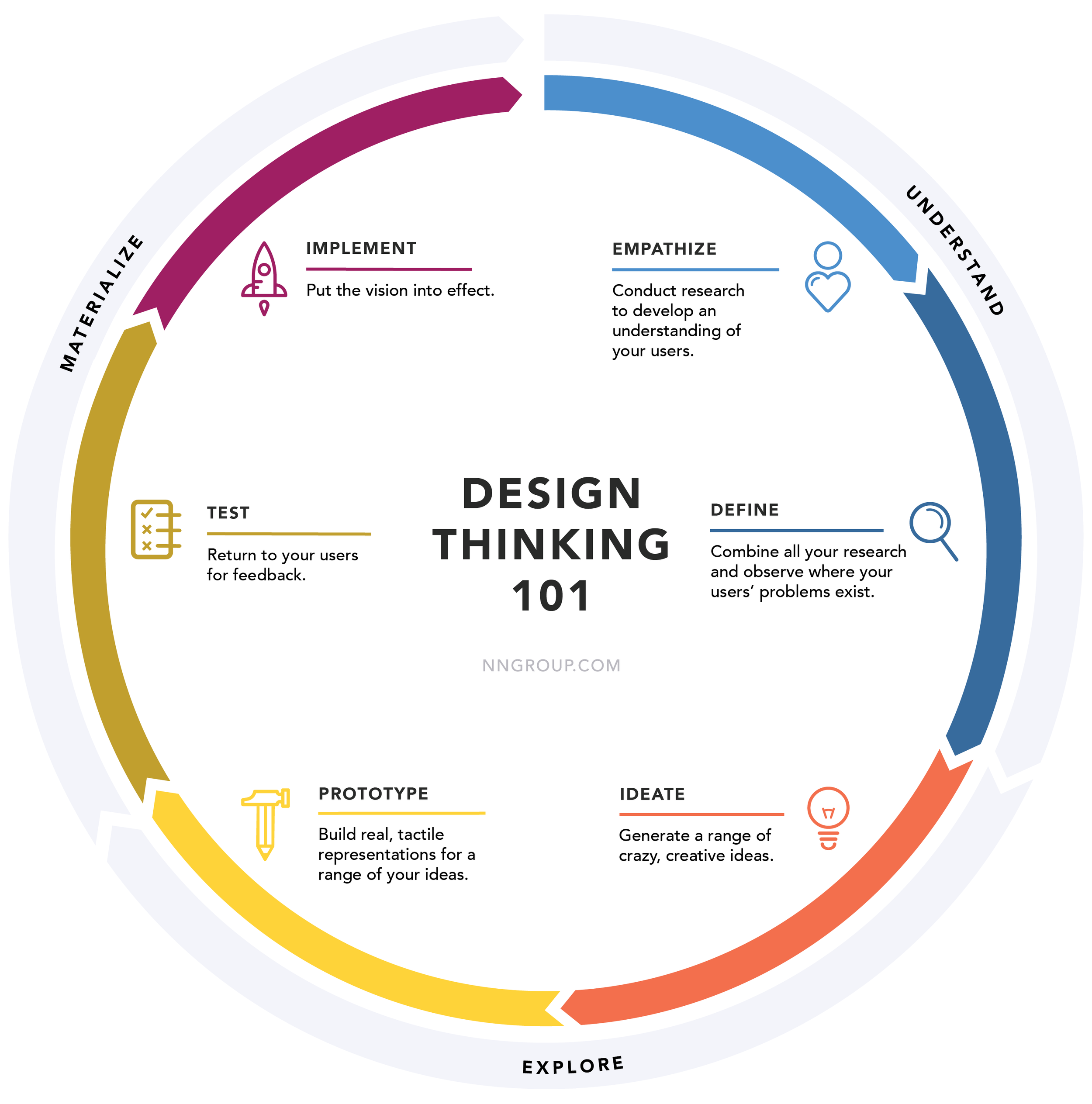
Nielsen Norman (article)
You don’t learn that from assumptions.
You learn it by listening.
When you know exactly whose problem you’re solving:
Solutions become clearer
Messaging becomes simpler
Customers feel seen, not sold to
Why validation with your audience feels hard (but matters more than you think)
Let’s be honest: deeply understanding your audience takes time and effort.
For those 50+ entrepreneurs, that feels expensive.
But skipping it is even more costly.
Because validation isn’t about proving your idea is “good.”
It’s about confirming there’s a problem–solution fit worth pursuing.
Once you start real conversations with your target market:
You get a pulse for what actually matters
Confidence in your direction increases
Decisions become easier to make
Once you’ve started discussing with your target market, validating the idea becomes a lot easier. Because then you’ll have a clearer understanding of whether the solution actually helps them solve the problem at-hand. Ideally, you’ll get a real pulse for the market and become more confident in what you’re building.
The hidden cost of waiting to validate
Waiting too long doesn’t protect you. It stalls you.
You delay launching indefinitely
You avoid uncomfortable feedback
You build in isolation
If you can’t find anyone with the problem you’re trying to solve, that’s already valuable data.
And here’s the truth most people avoid:
Sometimes validation happens after launch.
Post-launch feedback helps you:
Help you figure out what people are saying about your product or service
Get very real with potential customers on why they didn’t buy your product
The question you need to ask isn’t to validate the solution you have, rather it’s to ask about the ‘pain’ they’re currently experiencing and that tends to be much more important in the long term
The key question isn’t:
“Do you like my solution?”
It’s:
“What pain are you dealing with right now?”
That said, if you’re short on time and money, there are different strategies in how to do more research about your audience. Note: I personally believe customer discovery interviews are the best way to know your audience!
There are different ways to learn about your audience:
Identify the industry or niche you’d like to serve
Customer Interviews
Starting your own community
Look at what the data tells you
Perusing forums or social media channels
You’re not selling solutions — you’re selling relief
Here’s where several entrepreneurs go wrong: They obsess over features before they understand pain. But pain always comes with context.
If you don’t understand that emotional layer, you’ll always underperform. No matter how good your product is.
Clarity is the real competitive advantage
When you truly know your customer:
Your messaging sharpens instantly
Differentiation becomes obvious
Content writes itself
Social proof sounds real, not forced
This isn’t fast. It usually takes 2–4 months to see patterns clearly.
But clarity compounds. Guessing doesn’t.
When you think about your signature offer… It’s important to hone in:
Frameworks are everywhere.
What’s rare is resonance.
A gentle prompt for this week
Before you build another feature, another landing page, or another offer, ask yourself this:
Whose problem am I actually solving and have I heard it directly from them?
